Dec 13, 2021
It’s the most wonderful time of the year, which likely means that we will soon be treating ourselves to some festive food and drinks! That’s why the holiday season is a great time for us to take extra good care of our teeth. To keep your mouth merry and bright this holiday season (and every season), we’ve come up with the 12 Days of Dental Health!
Choose Tooth-Friendly Stocking Stuffers
Instead of stuffing the kiddos’ stockings with sugary treats, consider filling them with a colorful new toothbrush, flavored flossers, sugar-free gum, and fun mouthwashes. Let your little ones in on a little secret – Santa is all about healthy dental habits!
Drink Lots of Water
Adults and children alike should be sure to drink lots of water around the holiday (and every day!). Drinking water helps to rinse away bacteria and food particles and can even reduce plaque build-up. This is especially important when sweets are on the menu.
Brush Your Teeth with Your Favorite Holiday Tunes
Get into the spirit of the season and ensure that you (and your little ones) are brushing for two minutes or more by humming your favorite holiday song. Most classic carols are at least two minutes long, making this a perfect way to add some fun to your dental routine. Although twice a day is great, you may want to add in an extra brushing after eating foods heavy in carbs or sugar.
Add a Rinse to Your Routine
In addition to daily brushing and flossing, give yourself the gift of a healthy mouth by adding a fluoride mouthwash to your routine. Rinsing with mouthwash after eating sweet and sticky treats can help to remove any residue leftover on your teeth and reduce the risk of tooth decay. Here at FDA, we recommend Oxyfresh mouthwashes, a powerful yet gentle mouth rinse designed to help keep your smile healthy and breath fresh.
Be Prepared with Travel-Sized Dental Care Products
If you plan to travel over the holidays, don’t forget to pack your toothbrushes, toothpaste, floss, and mouthwash. To save space in your luggage, shop ahead of time for travel-sized versions of all of your favorite products. Kids love miniature versions of things, so this creates an added incentive for them to take care of their teeth while they are away from home.
Treat Yourself (and Your Loved Ones) to a Water Flosser
Waterpiks and other water flossers make it easier to remove plaque from between your teeth and under the gum line, reducing the risk of gingivitis. This is a nice alternative to flossing for those who find flossing difficult or painful. It is also a great option if you’re concerned about all those little plastic floss containers ending up in the landfill.
Gobble Up the Turkey – It’s Good for Your Teeth
Turkey is high in nutrients such as protein, calcium, and Vitamin D, and low in sugar, making this a good choice for your teeth and bones (although you may need a nap after eating it, due to its tryptophan content – a natural sleep aid).
Reach for Calcium-Rich Appetizers
Grab finger foods that are rich in calcium, like cheese, and vegetables such as broccoli and snow peas, along with dips made with cream cheese and Greek yogurt. Your teeth and bones will thank you!
Watch Out for Sugary Drinks
In addition to sugary, non-alcoholic drink choices, such as soda, eggnog, and hot chocolate, many alcoholic beverages are also surprisingly high in sugar. No need to skip the festive beverages altogether – just drink them in moderation, followed by a glass of water or a rinse with mouthwash.
Beware of the Crunch!
Common causes of broken fillings and teeth are ice, hard candies, and popcorn, so proceed with caution! Accidents do happen, so if you do have a dental emergency, rest assured that our team of compassionate dental professionals will get you in as soon as possible to make any necessary repairs.
Get Smile-Ready with Teeth Whitening
If you want to make sure your smile is in tip-top shape for photos, consider scheduling an appointment with either Dr. Brunacini or Dr. Karagiorgos to go over your teeth whitening options. Here at FDA, we offer both in-office whitening and at-home options.
Get Your Hygiene Appointment on the Books
After all the festivities, make sure that you have scheduled your regular hygiene appointment with us. To check on an existing appointment, or to make a new one, feel free to give us a call at 207.781.5900. We are your partners in oral health and are here to help!

Nov 22, 2021
It is hard to believe it’s already November, yet we still have so much to look forward to! Thanksgiving is a time for family, food, and gratitude. We at Falmouth Dental Arts have so many reasons to be thankful this year and we wanted to share some of them with you…
Our Family of Patients
First and foremost, we are thankful for YOU! We wouldn’t be here today if it wasn’t for our wonderful patients. Thank you for trusting us with your oral health care; we are truly honored to help you achieve your best smile and oral health! We have been so grateful for your patience and cooperation as we have navigated new safety protocols. It’s times like these when community is so important and we couldn’t ask for a better community of patients. Thank you, FDA patients!
The FDA Team
We have an amazing group of compassionate and knowledgeable dental professionals at FDA. Our fantastic hygienists, amazing assistants, and stellar office team are the heart of our practice, and alongside Dr. Brunacini and Dr. Karagiorgos, help us provide the best oral care possible. FDA is truly a team effort and we are incredibly grateful to have individuals who are so dedicated to our patients and practice. Thank you, FDA team!
Tools for Healthy Mouths
FDA is committed to being on the cutting edge of dentistry and we are blessed to have access to some of the most modern dental tools and technology available today. From Invisalign, to digital x-rays, to restorative dentistry, to our VELscope oral cancer screening tool, we have many state-of-the-art tools and techniques at our fingertips that protect our patients’ health and smiles! Thank you, dental care tools and tech!
Our Health
Lastly, we at Falmouth Dental Arts are thankful for our health and the health of our families. Regular dental care is such an important component of our overall health and wellness, so remember to schedule your routine hygiene appointments, make healthy meal and snack choices, and take care of your teeth in between visits. For scheduling or to ask about any of our services, feel free to give us a call at 207.781.5900.
We wish our patients and staff a wonderful holiday filled with relaxation, good food, and pie for dessert (and don’t forget to brush your teeth!).
Happy Thanksgiving from our family to yours,
Dr. Brunacini & Dr. Karagiorgos & the FDA Team
Nov 19, 2021
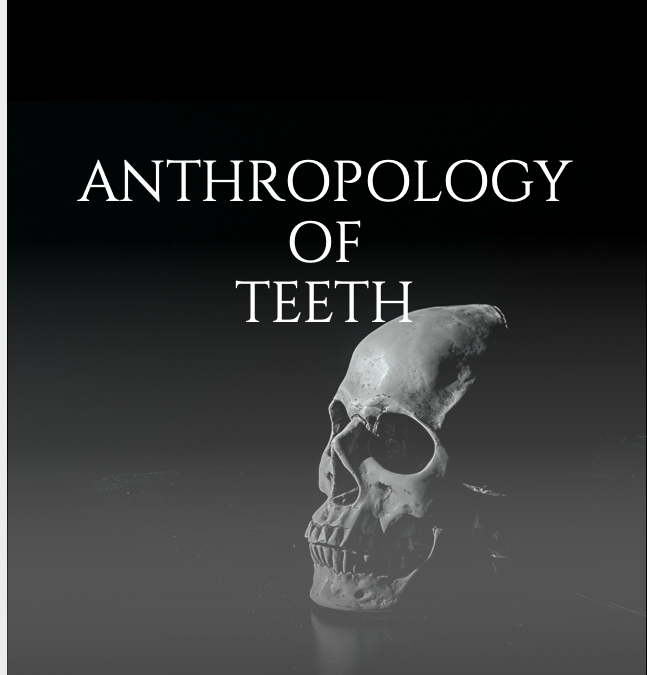
Need a fun conversation topic for your Thanksgiving gathering? How about teeth? Our teeth are fascinating! More than mere pearly chompers that chew your food and give you a beautiful smile, they can also convey a lot of information about us. Just ask Dr. Brunacini, your dentist and favorite amateur dental anthropologist! This month we close our interview series with Dr. Brunacini on Dental Anthropology. Join us for Part 3: If These Teeth Could Talk.
Why are teeth such a useful tool in studying our past?
Dr. Brunacini: Teeth can give us a snapshot in time about someone’s life, such as their age as well as their diet. They are exposed to our diet in ways that other body parts are not, so they often can convey useful information about a person and their environment. Also, teeth are unique in that they are slow to decompose. Your tooth enamel is the hardest substance in your body, stronger than your bones!
What can an anthropologist learn from our teeth?
Dr. Brunacini: Anthropologists can learn a lot from our teeth. Teeth can help determine how old a person was at death, what kind of health they were in, and what kind of diet they had. Teeth can even provide information about the human’s cultural rituals, such as cultures where dental modifications played an important role.
What is something fascinating you’ve learned from the study of teeth?
Dr. Brunacini: For me, the most interesting thing is how our jaws have become smaller over time, possibly due to diet changes, which has contributed to some common chronic diseases. Of course, with smaller jaws there is less room in our mouth for our teeth, which has made wisdom tooth extractions commonplace. Also, sleep apnea and acid reflux are very common diagnoses now that have some connection to jaw development from a young age.
As a dentist, is there an example of information that a patient’s teeth tells you that perhaps they themselves do not?
Dr. Brunacini: In modern days, the teeth we examine and evaluate daily gives us insight into a patient’s overall health. We commonly discuss issues such as bruxism (tooth grinding) with our patients, but we can also see signs of acid reflux and even sleep apnea that can affect the entire body. A patient may not be aware that their teeth can provide us with this sort of information about their health, or that as their dentist we can help them. Our goal is to be a partner for our patients in their oral care, which includes their overall health, and we are always happy to discuss treatment options that can help improve the health of their teeth and their body!
Thank you, Dr. Brunacini!
If you have questions about your teeth or need to schedule your next appointment, please give us a call at 207.781.5900.
Sep 28, 2021
You brush, you floss, you’ve started scraping your tongue, and you come in for regular check ups. Perhaps you’ve been wondering why you need to get dental x-rays on top of your excellent oral care routine. Are dental x-rays really necessary for your oral health? The answer is yes: dental x-rays are a useful diagnostic tool for Dr. Brunacini and Dr. Karagiorgos and help them detect damage and disease not visible during a general exam. This month we spoke with Dr. Karagiorgos about why dental x-rays are an important part of your oral health care.
Dental X-rays provide dentists the opportunity to identify any potential problems in the mouth. What exactly are you looking for when you review X-rays?
Dr. Karagiorgos: X-rays are a very important diagnostic tool that allow dentists to see more of people’s teeth than what we can see in the mouth with just magnifying lenses and a headlight. With x-rays we can see things like tooth decay between adjacent teeth, we can see if there are any potential problems under the gums, in the bone or in the roots of the teeth.
Are there any types of x-rays that hurt or require special preparation or protection?
Dr. Karagiorgos: Dental x-rays themselves don’t hurt per se. There are conditions in some patients that can make it a little more difficult for those patients to take x-rays. For example, patients with a limited ability to open their mouth, patients that have a very strong gag reflex or some that have larger bony protrusions in their mouths. X-rays have evolved and improved quite a bit over the years. At Falmouth Dental Arts, we have state-of-the-art digital x-ray sensors that allow us to take and immediately see diagnostic images in high resolution, using far less radiation than the previous generation film x-rays.
What are the most serious diseases or conditions that you can prevent thanks to taking regular X-rays?
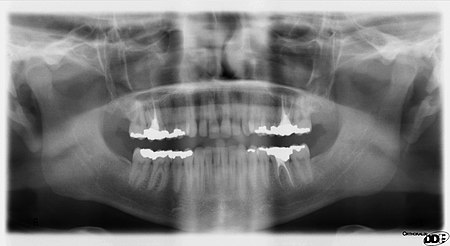
Dr. Karagiorgos: X-rays can help us routinely detect things like dental decay and tooth infections. X-rays can also help us diagnose very serious general health problems. We can see pathology in the bone like invasive cysts or cancerous tumors. Panoramic films and 3D cone beam x-rays that rotate around the head are commonly used to evaluate the jaw joints or to see wisdom teeth coming in. These x-rays with expanded fields of view can also help us see things like restricted airways, salivary blockages or even calcifications in the circulatory system of the neck which can put patients at increased risk of stroke.
What has been the most surprising thing that you have seen on Dental X-rays?
Dr. Karagiorgos: I just got back from a dental convention where a dentist presented the latest imaging technology. He presented us a slide showing x-rays taken on a 6 year old boy. His images showed what looked like a round metal object in the boy’s left sinus. The x-ray image was of such great quality that we were able to make out George Washington’s bust! It turns out that without anyone’s knowledge, the boy had lodged a quarter so deep into his nose that it ended up in the boy’s maxillary sinus. That was pretty surprising to see, but even more surprising was the very next slide.
It was an x-ray of the sinus of the boy’s 8-year-old brother. Apparently, the brother had a lego brick in the exact same location!
Are there any medical conditions or situations where you advise patients to not undergo x-rays?
Dr. Karagiorgos: Typically, no. Dental X-rays are of lower doses of radiation. They are considered generally safe. That said, we specifically try to limit x-ray exposure to expectant women. We are always weighing the risks and benefits of every treatment, and this includes taking x-rays.
As dentists, we practice the ALARA principle with radiation. ALARA stands for “as low as reasonably achievable”. This principle means that even if it is a small dose of radiation, if there is no direct benefit, you should try to avoid it.
Thank you, Dr. Karagiorgos!
When was the last time you had x-rays of your teeth taken? We recommend routine Bitewings x-rays for adults every 1-2 years depending on decay history, gum health, and dry mouth. For children and teens we recommend it every year. Major films are recommended every 3-5 years for both adults and children to monitor growth and development as well as periodontal health. Call our office today at 207.781.5900 to make your appointment!
*Image courtesy of www.wikipedia.org
Sep 15, 2021
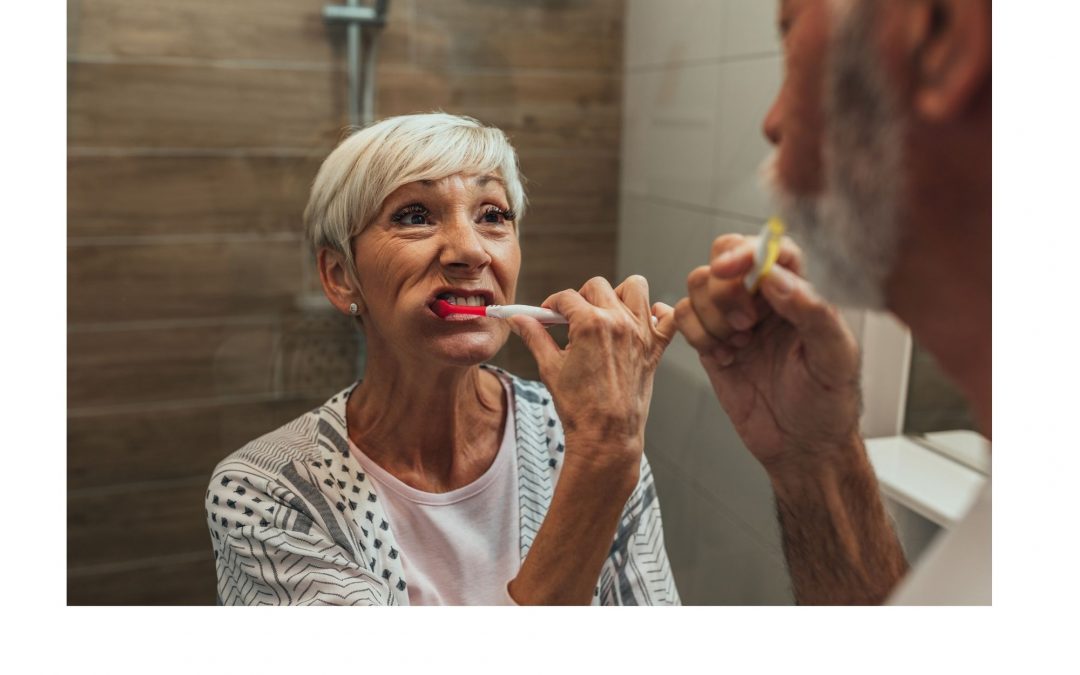
September is here which means back-to-school and back to our routines. As you get back into the swing of things, don’t forget about your teeth! Your daily oral health routine is important for not just your mouth, but your overall health as well. We’re here to help with our top three tips to achieve better oral health!
HOW TO KEEP YOUR SMILE IN SHAPE
1. Have a Consistent Oral Routine.
- Brush your teeth twice a day with fluoride toothpaste (remember to change the toothbrush, every 3 months!).
- Clean between your teeth (you can use floss, a flossing device, or an interdental brush, whatever is more comfortable for you!).
- Scrape your tongue.
2. Eat a Healthy Diet.
- Focus on vegetables, fruits, whole grains, and legumes. They are packed with the nutrients your body needs to be up and running, and they help support oral health, too!
- Limit foods high in sugar, such as processed foods. This includes alcohol! Sugar causes cavities.
- Stop smoking or using any tobacco products. Not only does smoking stain your teeth, but it can also cause gum disease and cancer in the long term.
3. Visit Dr. Brunacini or Dr. Karagiorgos for Regular Check-Ups.
- The best way to fix dental issues is to detect them as early as possible. Visiting us will prevent dental issues from going unnoticed or getting worse.
Having a good oral health routine can be as easy as 1,2,3! Consistency is key when it comes to establishing new habits, so stick with it. If you have questions or concerns about any of these tips, please let us know! You can ask your hygienist, Dr. Brunacini, or Dr. Karagiorgos at your next appointment. It is a conversation that we have with many patients and it will help you have better overall health!